How to train your subconscious mind? — Being Conscious of the Subconscious, is being Super-Conscious.
Want to listen to the article? Hit the play button and enjoy the article in a podcast style.
Themes – Psychology, philosophy, existential
How to Train Your Subconscious Mind
This guide explains how to train your subconscious mind through deep breathing, mindfulness, emotional awareness, and intentional pauses between thought and action. It explores how the subconscious shapes behavior and how conscious awareness can reprogram old patterns and emotional reactions.
“Isn’t it weird that your subconscious mind remembers and knows more about you, than you know them consciously?”
Okay, let’s start with a question.
How much of your life do you think you live consciously? Out of all the decisions you make, how many do you really decide, and are not motivated by some underlying emotions within you?
The last time you got angry, was it an outburst of anger which you justified later, or you really thought of it before raising your voice, that it’s the way you need to express yourself for the given situation?
Well, whether we acknowledge it or not, it’s now a scientific fact that we live almost 90% of our lives, unconsciously, that is driven by subconscious instincts. Whether it’s driving back home without thinking of directions, or murmuring a song without trying to catch the next lines – they sit in the subconscious field of our brain.
And that’s why, the subconscious mind becomes a major factor of our lives. It won’t be wrong to say that our life is dictated or directed by what we hold in the subconscious. But do we really address it with that much importance? Do we really understand how it works, and how it produces responses, actions, thoughts, every single moment throughout our lives?
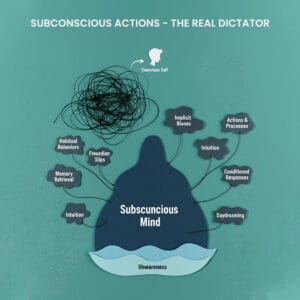
Perhaps no. And that’s why, we often are left with confusions and with feelings like, why did this happen to me, why did I react like that when I didn’t intend to, and so on.
Hence, this article focuses on bringing that unattended aspect, yet a very critical layer of life to emphasis.
So the first question is - where does the subconscious mind lie? Is it a part or a region in the brain, or in what form it exists?
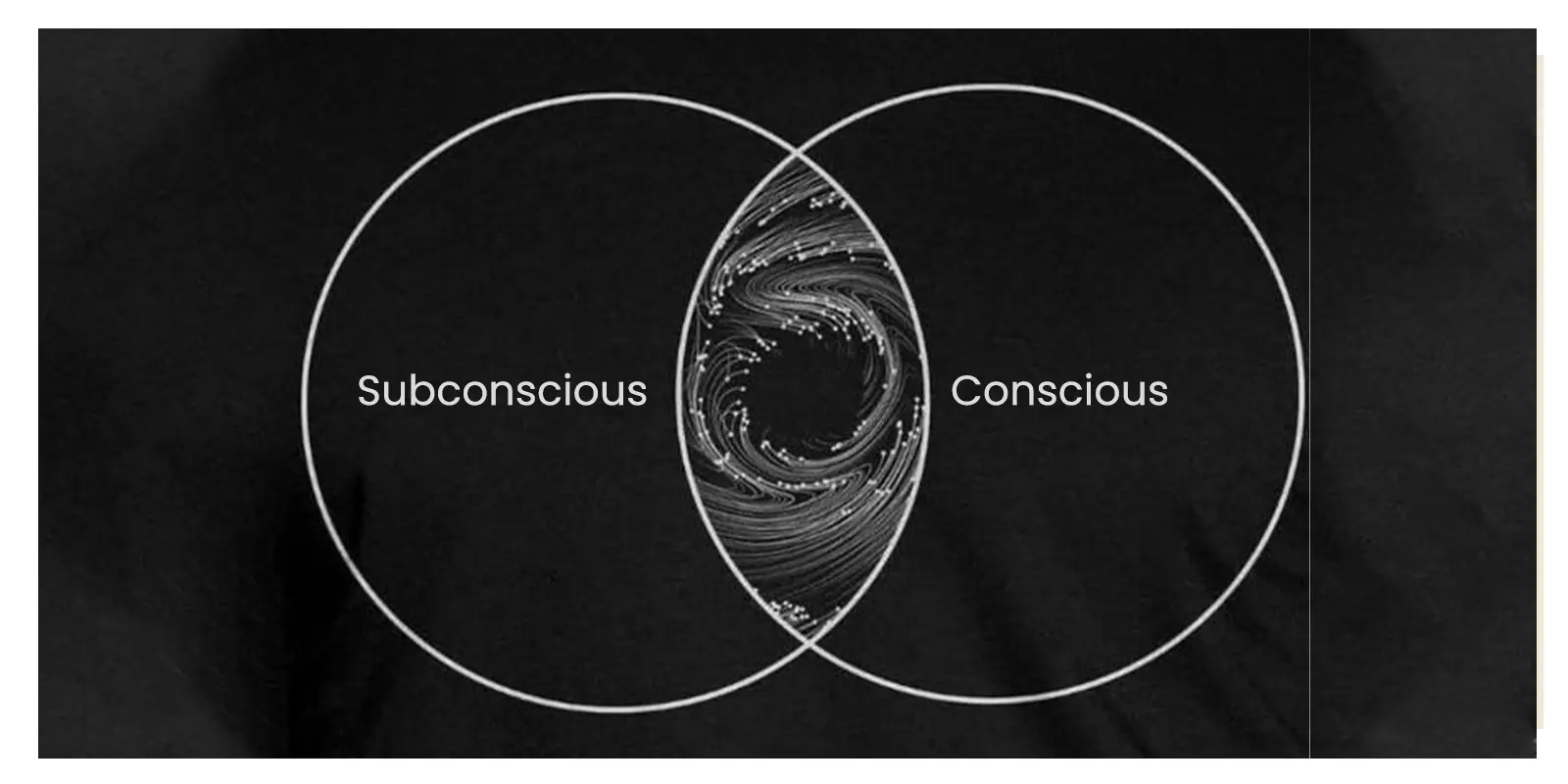
As per science, the subconscious mind doesn’t have a particular region in the brain, instead it works like a field of electromagnetic radiations, which then are taken up by different parts of the brain. The different parts of the brain that have particular functions, like associated with memory, emotions, responses – further flow through our brain and body, because of which we start to feel, act, speak or respond to given situations.
But the most interesting thing here is that, none of this begins with our conscious effort, instead, how we respond, begins with the stimuli received from the subconscious mind – a pool of information stored within.
But, if not the subconscious mind, does the conscious mind occupy a region in the brain?
Well, no. Similar to the subconscious, the conscious mind too has no region in the brain, instead we call a decision to be conscious one, when the brain is aware of what the subconscious mind initiates – whether it’s an action emerging from some emotions or memory of fear. With this awareness, the different regions of the brain work in synchronicity, firing up all together, and that’s when an act is considered as a conscious act, and not just a subconscious decision, that doesn’t bring the different regions of the brain in synchronicity.
It’s like if you get an urge of having chocolate late at night, it’s a subconscious firing. But when you become aware of it, or you ask why do you want to eat a chocolate so late at night, you start to build the conscious effort, and start tracking the subconscious instincts that made you feel so.
The work of the subconscious mind?
Basically the subconscious mind keeps a record of all that we feel through different situations of life, and how we respond to them. This also includes the habits we build to tackle subtle emotions like gaming for boredom, or even smoking when you have nothing to do.

The subconscious mind registers even the subtlest things, and as we keep repeating them, they become stronger and stronger in the subconscious field. It’s like the more we practice a habit, the more the subconscious mind gets trained with it.
All these registered memories of events and responses act like a reference for the subconscious mind, to calculate, analyze and give us instincts for how to respond in future events.
It’s very much similar to an automation process, which gets trained in certain ways, with practice. It registers those responses that we tend to have more, like getting angry at certain things, being happy with others and so on. And with practice, when similar incidents come in life, the subconscious mind just responds without disturbing us much.
If we see, it’s there to help us, by reducing our work and calculating, how to respond to which situation, every time something happens. But it’s a two sided sword as well.
Subconscious Mind - The two sided sword
We learn things by seeing people around us, adopting their habits, learning the words, the tones, logic from the world about relationships and everything. And this training starts from the very beginning, that is since birth. Whether we notice it or not, the subconscious mind takes note of everything and starts to mimic to make a place in the society, where we can act and respond the way the society does.
While this enables us to find a link for a newborn and growing individual in the society, it also registers the habits that are not so right. For example, seeing others, especially elders, seeing them on which things they get angry, how they express their anger and so on. And without a check, we grow up from a very young age adopting these habits and responses, and start to input them.
But as we rarely see anyone teaching or showing qualities like how to take criticism or how to respond when things don’t go the way we expect, we don’t learn it too. Hence the subconscious mind doesn’t get trained to become conscious of its impulses and unrequired habits, and just keeps flowing with the training it receives.
But when not checked – that is if not asked consciously, that if something is correct to adopt, if the conclusions that society gives to a story is right or not, the stereotypes that it holds and so on, the subconscious mind gets trained in a way that would generate emotion and responses that might only harm or hurt us. The best example of it is anger, which we express to our loved ones, and later we realize that it only triggers a feeling of dissatisfaction or sadness in us.
But as we never practice to analyze these innate habits of the subconscious mind, and just act on them the instant we receive the command or urge from it, as a result, we often feel confused or realize later, that getting angry and speaking loud at our loved ones, or responding the way we did, wasn’t something we would have chosen, because in the end, it brought us and our people sorrow and pain. And this is why, we also feel as if it’s all out of our control.
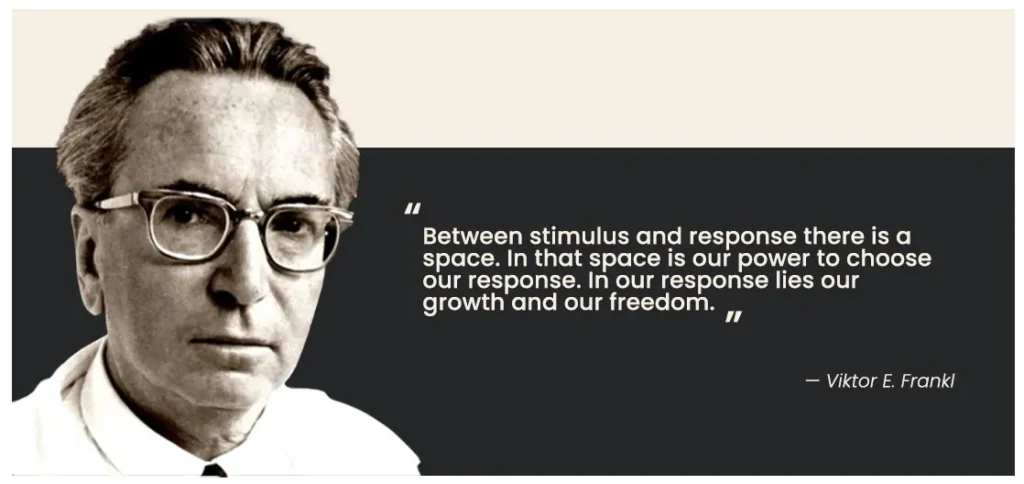
While the truth is, if we could have a little gap, before acting or responding, if we ask the question “why” to whatever we feel like doing, and then answer if it’s actually right, and useful for us to respond the way we always do, then we start to train our subconscious mind, in our way. In other words, we start to put conscious effort to our responses. And with practice, the subconscious mind gets trained with this conscious effort, further putting it into an automation for future events for our own betterment, bringing things more under our conscious control.
How to train the subconscious mind, to bring it under our conscious will?
Here are few scientific ways that you can add to your habits to keep your subconscious mind on check and to feed it consciously with what you really want –
1. Keep questioning your desires.
If you feel like having a chocolate quite frequently, ask yourself why you want it, and are you okay with the weight that you’re gaining with the unhealthy habits or can you replace the craving with something else? Maybe you can silence the sugar craving with something that has a balanced portion of protein, carbohydrates, good fats from nuts, and natural sugar.
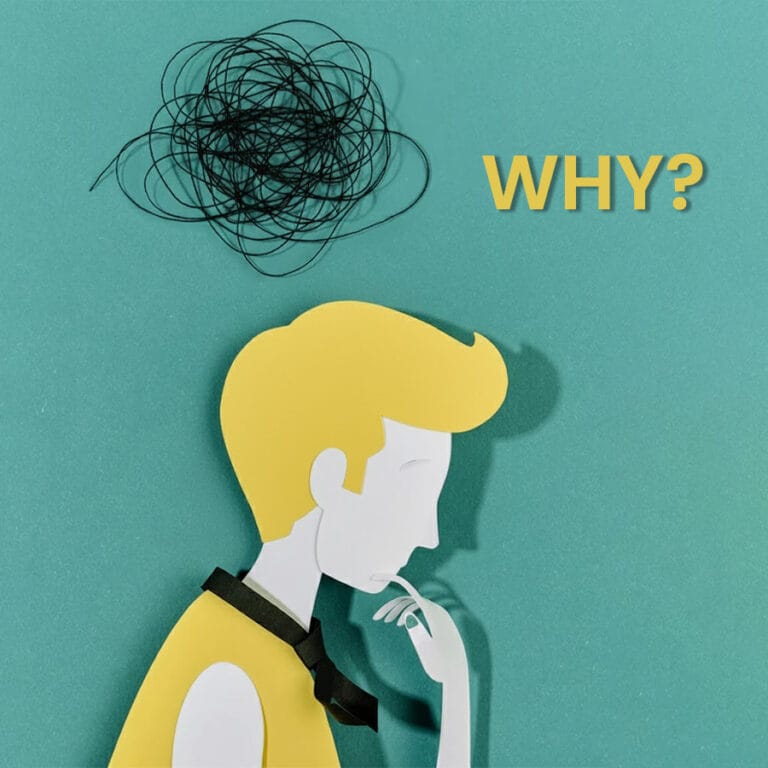
Similarly, when you feel like buying a new pair of shoes that you saw on social media or a new phone just because you got a new job or hike, ask yourself why you feel so, or if there is any real need for it. Is it really what you want, or it’s because there is an innate feeling that you would look better to the world, your friend circle, with the upgrade. And most importantly by asking yourself, if it’s a real need like adding exercise to your day to day life or timely sleeping and rest.
By doing this, you don’t ask yourself, instead you question the subconscious instincts, and deal with it consciously.
While initially it might feel a bit difficult to subside the emotions and urges, because we have always practiced to act on them and not to question and control them, but with time and some conscious practice, this habit too will get recorded in the subconscious mind, which later on in life, only help us to be more of ourselves and less of what the world tries to input through its commercialism and materialism.
2. Add habits that slow down the mind from its reactive state.
As we rarely keep a check on the rapid firings of our subconscious mind, which always keep us escaping the boredom or stress through habits like smoking or doom scrolling on social media, without any check we do it and waste our time, effort and energy. This not only impacts the moment we do these, but lingers to disturb our health, sleep cycle and mental wellbeing.
But we can slow these constant firing of the subconscious mind by adding exercise, sports, or walking in our day to day life, most importantly in times when boredom, stress, frustration or anger strike.
3. Long deep breaths —
It’s another technique that calms down the restless urge to do something, when we’re triggered with boredom, stress or anxiety.
Science has proven that deep long breaths, activates the parasympathetic nervous system, whose work is to rest and digest the impulses and firings of the subconscious mind, to bring a gap between the urges and how we respond to them.
Just one minute deep breathing slows down the stress-related neural firings, giving the brain a pause from automatic, reactive patterns of the subconscious mind.
Deep long breaths also decrease the stress hormones like cortisol and adrenaline levels, which otherwise pushes us for immediate reaction rather than thoughtful responses.
The benefits of deep breathing doesn’t end here. It goes further to activate the prefrontal cortex region of the brain, which is responsible for self-awareness and reasoning, allowing us to create a temporal gap between an emotional trigger and our reaction.
All in all, deep breathing is a scientifically proven habit, that reduces stress, rapid subconscious firing, activates the self awareness, creating a gap between subconscious habitual responses, and how we act, further allowing us to be conscious about how we respond in that gap, bringing our life under our control.
Again, we must use this gap for things like walking or something beneficial for us, instead of doom scrolling or something else.
Benefits of building the mentioned habits -
Through all the above practices, we not only bring a gap and pause to reflect on our reactions and actions while we are about to act on them subconsciously, at the same time we become more aware of them, we make these habits a practice, which further trains our subconscious mind to be more under our control and conscious will.
And this is exactly what allows our brain’s various regions to work in synchrony, making most of the actions and decisions a conscious effort.

Conclusion -
Firstly, to conclude would be to acknowledge and accept the fact that most of our actions, decisions and responses are initiated by our subconscious mind, and it does so with the habits we practice in our day to day life. The subconscious mind is the automation program to help us with readily available responses to external situations. While it helps in situations like what to do when you have an accident or something related to survival, when it comes to our habits, relationships and all the tangents that come from our emotions, they need to be checked – hence bringing forth our conscious effort into them.
This not only makes our lives feel more under our control, but also rewires and retrains the automotive way our subconscious mind works, for our betterment, making us most authentic of our unique selves.
If you want to gain deeper emotional control and reprogram your automatic responses, start with awareness and mindful breathing. This understanding of how to train your subconscious mind helps develop inner calm, mental clarity, and a healthier response to stress and thoughts.